
Boost Your Small Business Map Pack Rankings
Could some targeted tweaks to your Business Profile really lift you into the prime 3-Pack and deliver more in-store visits?
Local results on Google surface businesses near a searcher. Accurate, complete google my business product image size info increase your odds of appearing.
Practical local SEO tactics are essential. Keeping your address formatted consistently, a local area code, accurate hours, and clear images are must-haves. They help optimize Google My Business and improve your Google Map Pack ranking.
Agencies like Marketing1on1 note account verification, consistent Name, Address, Phone, and regular review engagement are efficient signals of prominence. They contribute to more calls, clicks, and foot traffic.
What the Google Map Pack Is and Why It Matters for Local SEO
The Google Map Pack shows three local business listings in search results and on Google Maps. It shows on proximity-based queries. It includes details like name, address, phone, hours, ratings, and photos.
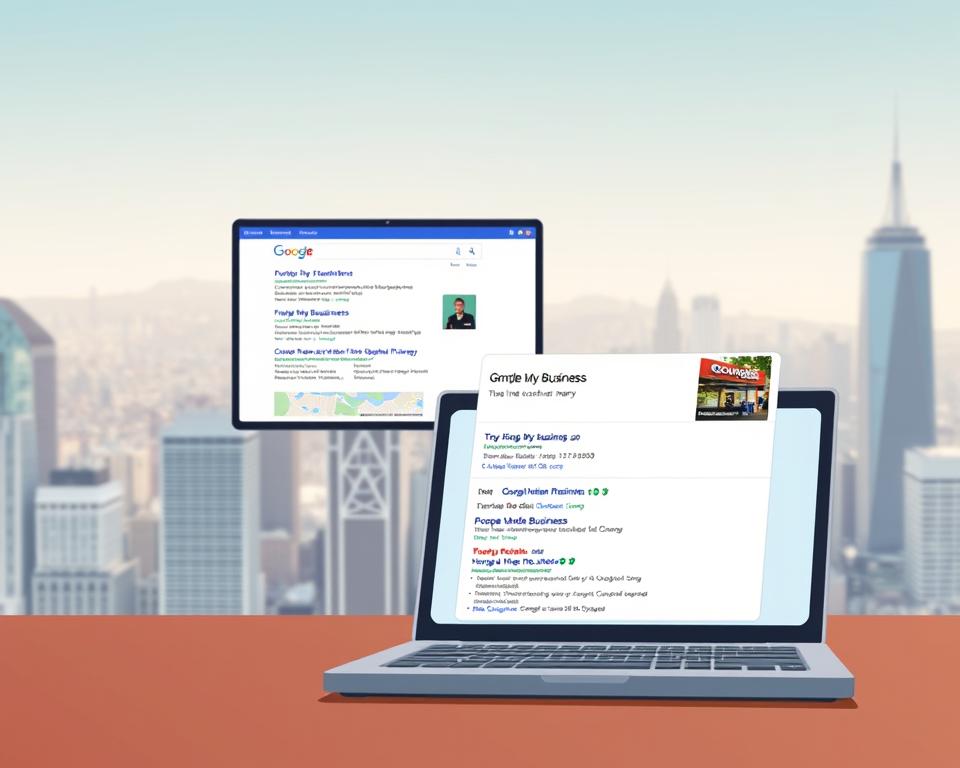
How the Map Pack appears
The Map Pack, also known as the 3-Pack or Local Pack surfaces three nearby options. It appears when Google detects local intent. It relies on GBP data to match queries.
Impact on clicks, calls, and store visits with industry stats
Local Pack visibility prompts more direct interactions. Studies by BrightLocal, Neil Patel, and Red Local SEO get higher engagement. BrightLocal found that 76% of local searchers visit a business within a day.
Outside the Pack, average organic CTR can hover around ~2.6%. This shows how powerful Map Pack visibility is for foot traffic and calls.
What makes the Map Pack different
The Map Pack is different because it uses live Business Profile data and focuses on local relevance. Its visual prominence often exceeds typical organic. Sponsored local ads can also appear, but those are paid.
Earning a spot in the three featured listings depends on Google Map Pack ranking factors and strong local SEO strategies. It’s not just about ad spend.
GBP Best Practices for Better Visibility
Start by claiming and verifying your GBP. It validates your business and boosts your local search visibility. Make sure your profile is always verified and update it if you change ownership.
Provide thorough details about offerings. Use your real business name and avoid keyword stuffing. Pick precise categories and drop the pin correctly.
List a local line and your site. Configure service areas when relevant. Keep standard and holiday hours current to reduce confusion.
Maintain consistent formatting. Keep address style uniform across listings. Avoid duplicate profiles to prevent confusion and ensure Google trusts your data.
Strong visuals matter. Add fresh photos and clips regularly. Refresh your images regularly to keep your profile active and support your Google My Business optimization efforts.
Write a short, original business description that includes local keywords naturally. Choose accurate categories and link to relevant pages on your site. Engage with reviews to build credibility.
| Task | Why It Matters | Best Practice |
|---|---|---|
| Claim & Verify Profile | Proves ownership, increases visibility | Complete verification; keep status current |
| Accurate NAP | Supports trust and ranking signals | Use consistent address format for location consistency |
| Categories & Description | Helps Google match searches to services | Select precise categories; write a natural local description |
| Hours & Special Hours | Reduces visitor frustration; prevents search errors | Update regularly; include holiday schedules |
| Photos, Videos & Listings | Improves engagement and click-throughs | Post high-quality images, short videos, and product listings |
| Review Management | Builds prominence and local trust | Ask for reviews ethically; reply promptly and professionally |
What Drives Map Pack Rankings
Google has three main signals to pick businesses for the Map Pack. Understanding relevance, distance, and prominence helps local brands get seen more. Expect more direction requests and calls.
Relevance: match intent
Relevance checks if your Business Profile matches what users are looking for. Make sure to fill out every field in your Google Business Profile. Be exact with categories and services.
Include local keywords on your profile and website. That helps connect queries to your listing.
Name offerings specifically. Keep terminology consistent. This avoids mixed signals that can lower relevance.
Distance: proximity & estimation
It reflects nearness to the searcher. Google may estimate from IP and device data. Proximity heavily impacts “near me” queries.
Make sure your profile has the right address and service-area settings. Publish locale-specific pages. This strengthens your distance-based relevance.
Prominence: reputation & links
Prominence reflects online/offline reputation. Signals include reviews, links, press, and citations. Quality/quantity of reviews influences visibility.
Encourage honest reviews and pursue quality links. Think chambers, newspapers, and trade groups. This increases your perceived prominence.
NAP Consistency & Location Hygiene
Consistent NAP underpins local trust. It reconciles GBP with major listings. Minor mismatches can reduce visibility.
Why NAP matters
Google checks if your business really exists at a given place. Uniform NAP clarifies signals. This increases your chances of showing up in the Google Map Pack.
Managing directory listings and citation accuracy
Audit citations across major platforms. Standardize unit formatting. Remove any duplicates to avoid confusing Google.
Tools and processes to track and update citations
Maintain a central log or use software. They highlight errors to fix. Refresh data on a cadence.
Practical checklist to protect local signals
- Keep the official name consistent.
- Keep address style uniform.
- Keep the same phone format and country code on every profile.
- Claim big and vertical directories.
- Record every listing URL and last update date in a central file.
Consistent NAP plus regular updates strengthens authority. This helps you show up in the Google Map Pack, making it easier for customers to find you.
Reviews & Reputation Management
Reviews heavily shape local perception. Good feedback and professional replies show care. Review analytics inform strategy.
Counts and averages signal trust. Strong review profiles correlate with better Pack presence. Ongoing real reviews support more clicks and directions.
Policy-compliant review requests
Request brief, experience-focused reviews. Send follow-up emails with a direct review link on receipts and invoices. Use signage to show how to review. Avoid incentives or fake reviews.
How to reply to any review
Respond promptly—ideally within a week. Acknowledge details to personalize. For criticism, empathize, explain next steps, and move sensitive talk offline. Fast, respectful replies reinforce prominence.
Track review metrics in GBP Insights. Use this data to improve your outreach and services. Integrate reviews into local strategy for lasting gains.
Strengthening On-Page Local Relevance
Good on-page work makes Google link your site to local searches. Ensure NAP consistency site-wide. This makes search engines trust your location info.
Maps + visible NAP
Embed a map on Contact/About. Mirror the GBP address. Place full NAP in the footer.
This alignment reduces ambiguity. It supports direction signals.
Local modifiers in content
Build localized service landing pages. Favor service+location phrases.
Write readable headers and metas. It supports both search and usability.
Ideas for localized content
Publish staff bios, area news, seasonal promos. Add hours, localized about copy, and testimonials.
Events, community partnerships, and case studies from your area boost your site’s prominence. They help users find timely, useful info.
| On-Page Element | What to Include | Benefit for Local Ranking |
|---|---|---|
| NAP in footer | Exact business name, full street address, local phone number | Improves location consistency and trust with Google |
| Embedded Google Map | Interactive map tied to the same profile address on Contact and About pages | Boosts click-to-direction signals and aligns site with profile |
| Localized service pages | City/neighborhood terms, service details, unique content per area | Targets local queries and aids Google Map Pack ranking factors |
| Local content sections | Staff bios, events, local testimonials, operating hours | Builds relevance and prominence for nearby searches |
| Technical basics | Fast pages, mobile-friendly layout, structured contact markup | Enhances user experience and supports local search signals |
Business Citations and Directory Strategies to Build Authority
Business citations and directory listings are key for local SEO. They show search engines where a business is and how trusted it is. Consistent citations enhance presence.
General vs. niche/local directories
Claim large, reputable directories first. Layer on industry and local sites. Healthcare: ZocDoc/WebMD; Restaurants: Yelp/TripAdvisor.
General sites broaden reach and baseline authority. Niche directories, on the other hand, bring in targeted traffic that supports your local SEO efforts.
Consistency and duplicate control
It’s more important to have consistent Name, Address, Phone (NAP) across all listings than to have many. Match name/phone/address exactly. Small changes can confuse search engines and users.
Check directories often to find duplicate listings. Merge dupes and repair inaccuracies. It preserves clean citation signals.
How citations contribute to prominence and trust
Prominent platforms amplify prominence. Mentions/links/reviews act as proof points.
Keep track of where your business is listed, update important ones first, and aim for a steady flow of accurate mentions. That approach lifts authority and Pack performance.
Earning Local Backlinks
Local backlinks are like votes of confidence for nearby businesses. They factor into prominence/trust. Links from regional outlets can lift Pack visibility. It also supports broader local SEO strategies.
Draft a target roster. Consider news outlets, blogs, chambers, vendors. They publish profiles and event pages. Offer relevant angles their audience values.
Content that earns links is crucial. Make neighborhood guides, how-to articles tied to local needs, and original data or surveys. Offer quotes for reporters at outlets like The Boston Globe or local TV stations. These quotes often turn into backlinks that strengthen Map Pack prospects and reinforce local SEO strategies.
Use sponsorships and partnerships to build strong local relationships. Trade sponsorships for online mentions. Co-create content/resources with partners. This builds links and goodwill.
Score prospects by relevance/quality. A mention from a well-known regional outlet carries more weight than many low-authority citations. Use a simple spreadsheet or a link tracker to log prospects, outreach status, and earned backlinks. Persistent outreach builds durable prominence.
Mobile-Friendliness and Website Performance for Local Users
Most local searches come from mobile users. Fast, usable pages convert Pack traffic. Make your site mobile-friendly and optimized to boost nearby searchers’ actions.
Mobile performance essentials
Fast load matters. Compress media, enable caching, trim heavy scripts. A responsive design makes it easy to use on phones and tablets.
Make navigation intuitive. Promote tap-to-call and directions. Choose clear headings, large tap targets, and easy-to-read fonts to help Google understand your mobile site.
Why mobile changes behavior
On-the-go users look for immediacy. Directions/calls are common actions. A fast-loading site with correct contact info encourages more clicks from the Map Pack.
Nearness matters most on phones. Show travel times, maps, or “open now” status to make it easy for nearby customers to act.
Technical SEO checks to strengthen local ranking signals
Audit tech health routinely. Validate schema/NAP markup and HTTPS. Submit sitemaps and resolve crawl issues.
Work on website optimization. Tighten assets and delivery. Embed a map and align NAP with GBP.
These actions help your local SEO by improving user experience. They send strong signals about your location and service relevance.
Align Service Areas with Proximity
Defined coverage areas support ranking. Align GBP service areas to reality. Also, create location-specific pages and content to show consistent information everywhere.
Configure service areas correctly
Enter only service areas you actually serve. List cities, ZIP codes, or neighborhoods you regularly serve. Avoid overbroad areas that erode trust.
Ensure consistency across GBP, site, and directories. This alignment aids local intent.
Target nearby queries with localized pages
Create dedicated pages for each service area with tailored content. Use phrases that combine services and locations. It increases map/organic eligibility.
Make area pages easy to find. It speeds discovery for users/bots. It strengthens local architecture.
Searcher location & IP signals
Google often calculates distance from either a shared device location or an estimated location based on IP address. Without place names, proximity can dominate.
Reinforce proximity with settings/content/citations. This mix gives Google a clear footprint to match against a searcher’s location. It boosts exposure to nearby users.
Measure & Optimize Continuously
Establish your GBP starting metrics. Review impressions, clicks, calls, directions, and queries. Turn baselines into goals and experiments.
Key metrics help you see how well your GMB is doing. Monitor Pack views, CTR, sessions, calls, and directions. Also, track review velocity, average rating, citation volume, and local backlinks. Check these metrics weekly to spot trends.
Use different tools to measure your progress. GBP gives interactions and queries. Analytics connects Pack traffic to behavior. Track local SERP positions with tools.
Tools like ReviewTrackers streamline reviews/citations. Leverage GSC for index/link insights. This stack creates comprehensive visibility.
Run controlled tests to see what works. Try changing profile fields, publishing local pages, and asking for reviews. Change one thing at a time and track the impact on impressions and clicks.
Maintain an experiment log. Use an experiment log with dates, actions, and outcomes. Iterative, logged testing works best.
Make a monthly report that shows your wins, failures, and plans. Include charts of impressions, clicks, calls, and direction requests. Let insights guide strategy and tracking.
Conclusion
To get to the top of the Google Map Pack, you need to keep working on your local SEO. Maintain a complete, current GBP. Preserve NAP consistency across platforms.
Fresh media helps. It signals activity and trust.
Customer feedback and quick responses are key to standing out. Having lots of business citations and local links also helps. Use on-site local pages, mobile-friendly sites, and service area settings to show you’re nearby.
Start by claiming and verifying your Google Business Profile. Clean up citations and grow reviews. Watch Pack impressions and calls.
If you need help, Marketing1on1 can assist. They know how to improve your Google Map Pack ranking. They can drive more clicks, calls, and visits.